
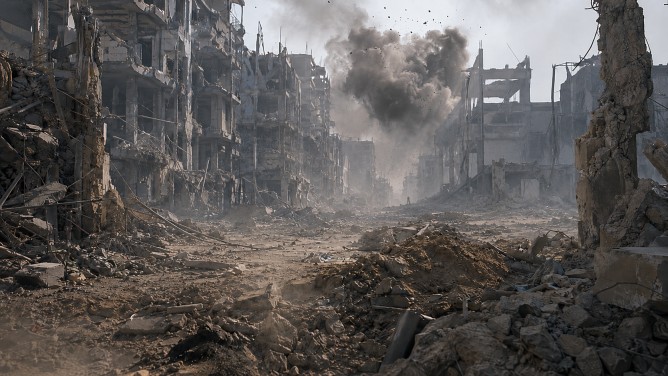
As Israel continues its military operations and maintains its presence in parts of southern Lebanon, the rift between Hezbollah and the Lebanese government is becoming more pronounced, leaving local communities in a precarious position between competing sources of security and aid. For many decades, Hezbollah has established an extensive array of social services, including housing, healthcare, education, and financial support for families affected by conflict. These services have become crucial for residents displaced by the ongoing hostilities, especially as Lebanon’s financially troubled government struggles to provide equivalent support.
The Lebanese government is striving to bolster state authority and rebuild public confidence, particularly in regions previously under Hezbollah’s influence. The army has assumed responsibility for reconstruction and infrastructure projects in several areas reclaimed from Israeli control, aiming to enhance the visibility of government institutions to the local populace. However, the state faces considerable hurdles. Ongoing Israeli attacks and military activities in southern Lebanon have eroded trust in the government’s ability to safeguard its citizens. Some residents criticize the government for its ineffective response, while others hold Hezbollah accountable for perpetuating cycles of conflict.
According to Lebanese officials, rebuilding trust among Hezbollah’s supporters will require more than just security initiatives. They emphasize that the government must enhance public services, increase political inclusion, and create economic opportunities before expecting communities to fully depend on state institutions. This situation has also complicated efforts to disarm Hezbollah, as Lebanese authorities are pressured to assert state control over weaponry while avoiding the perception of siding with Israel against southern Lebanese communities.
Officials caution that a meaningful restoration of state authority will remain challenging unless Israeli military actions and occupation in southern Lebanon cease. Until such conditions change, many residents continue to perceive Hezbollah as a more dependable source of protection and aid compared to the financially constrained Lebanese state. The ongoing conflict underscores the complexities facing Lebanon as it navigates internal divisions and external pressures in a bid to restore stability and governance in the region.