
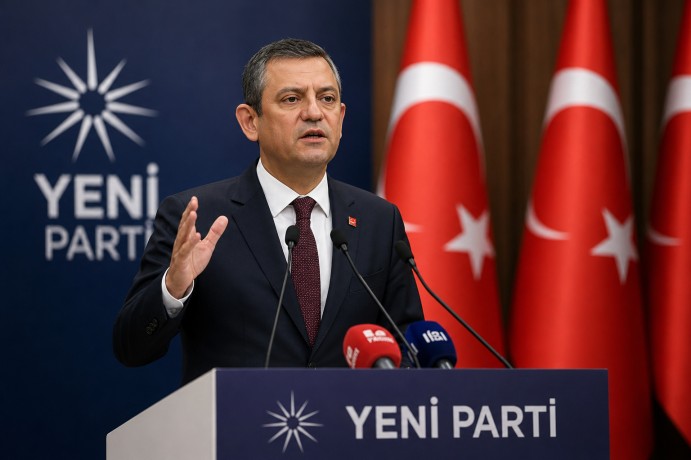
In a significant transformation of Türkiye’s political scene, 91 lawmakers have exited the Republican People’s Party (CHP) under the leadership of former party head Özgür Özel to form a new political entity known as the New Party (Yeni Parti). This departure represents the most substantial split in the CHP’s modern history, effectively altering the parliamentary power dynamics. With these lawmakers joining the New Party, it now stands as the largest opposition faction, reducing the CHP’s parliamentary presence from 135 seats to a mere 44 and stripping it of its longstanding status as the main opposition party in the country.
Özel officially inaugurated the New Party on Friday by completing the necessary paperwork for its establishment, which was subsequently submitted to the Interior Ministry for registration. Alongside Özel, the 91 lawmakers who left the CHP have become part of the party’s founding board. In a press briefing held in Ankara, Özel announced the completion of the legal registration for the party and outlined plans to swiftly establish its leadership framework. He disclosed that the founding board is set to convene at the historic Anadolu Club, a venue with ties to Mustafa Kemal Atatürk, to elect the party’s chairperson and other governing bodies.
Özel expressed the party’s intent to engage in the forthcoming parliamentary budget discussions as the main opposition, describing this participation as both a debut and a farewell in that role. He voiced his ambition for the New Party to eventually lead a government prioritizing economic growth and political steadiness. The departure of these lawmakers is anticipated to prompt a reorganization of seating arrangements in the General Assembly and expand the number of parliamentary groups from six to seven.
The division within the CHP follows a period of internal disputes, especially after Kemal Kılıçdaroğlu returned to the party’s leadership post a court decision that nullified a previous party congress. In response to the formation of the New Party, CHP spokesperson Müslim Sarı questioned the necessity of a new political party, noting that Özel had committed to adhering to the same political ideals as the CHP. “If you are going down the same path, why do you need a new party?” Sarı inquired, suggesting that the creation of the new entity might be more about strategic positioning than substantive policy differences.
The introduction of the New Party is anticipated to significantly influence the landscape of opposition politics in Türkiye, especially as the country approaches future legislative discussions and elections. This development marks a pivotal moment in the nation’s political narrative, potentially redefining alliances and challenging established political roles.