
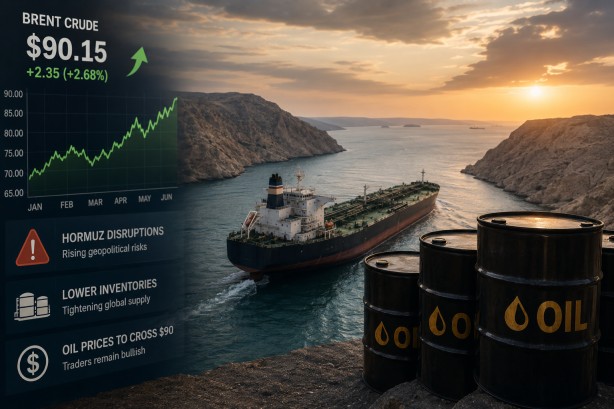
Oil prices have surged to their highest weekly increase since April, with Brent crude approaching $85 per barrel after an 11% rise over the past week. However, experts suggest that a sustained disruption in the Strait of Hormuz or evident signs of tightening in global oil supplies would be required for Brent to push past the $90 mark.
The recent spike in prices comes on the heels of renewed tensions between the United States and Iran, which have disrupted Middle Eastern supply routes and slowed tanker traffic through the critical Strait of Hormuz. The US benchmark, West Texas Intermediate, also neared $80 per barrel as a result of these geopolitical frictions.
Despite these regional tensions, Brent crude has encountered resistance at this week’s high of $87.55 per barrel. Analysts note that many market participants still anticipate diplomatic interventions to avert a prolonged crisis that could significantly impact the oil markets.
As a vital passageway for roughly 20% of the world’s oil supply, the Strait of Hormuz remains a paramount concern for energy markets. The slowdown in tanker movements has prompted shipping companies to keep a vigilant eye on the security situation. Meanwhile, the ripple effects of these developments are being felt in fuel markets, with rising refining margins in the United States due to tightening diesel and gasoline supplies, and European fuel markets experiencing similar pressures.
Additional complications arise from disruptions to Russian exports, which further stoke fears about global supply constraints. Analysts assert that without a notable decline in inventories or an escalation of tensions between Washington and Tehran that leads to extended shipping disruptions through Hormuz, oil prices are unlikely to break decisively above $90. For now, traders are closely monitoring diplomatic efforts and supply data to gauge the next significant shift in global oil markets.