
Security analysts and Latin American experts are questioning whether the United States military operation that captured Venezuelan President Nicolás Maduro will lead to genuine democratic transformation, with some suggesting the country’s political system may simply produce new leaders from the existing power structure. The Saturday strikes have triggered international condemnation but uncertain prospects for Venezuelan democracy.
Dr. Carlos Solar from the RUSI think tank noted that while the regime doesn’t have Maduro, it appears to still be functioning with the vice-president and other members of the former president’s entourage. He drew parallels to when Hugo Chávez died and Maduro succeeded him, with Chavismo continuing for another decade and a half despite the leadership change.
Dr. Christopher Sabatini from Chatham House characterized the strikes as “almost inevitable” after six months of failed efforts to remove Maduro through other means. However, he noted that American public opinion opposes military involvement in Venezuela, and any sustained strikes would likely require Congressional approval under the War Powers Act.
Sabatini raised critical questions about whether the Trump administration has the commitment for sustained engagement that would be necessary if regime change occurs. He emphasized that even if the current government falls, there is no guarantee that what replaces it will be democratic, and any transition would likely require ongoing American involvement.
The captured Venezuelan leader and his wife are being transported to New York to face drug trafficking charges, according to US Attorney General Pam Bondi. The international community has widely condemned the operation as a violation of sovereignty and international law, with the UN, China, Russia, and European leaders calling for respect of established legal norms and warning of dangerous precedents for international relations.
Think Tanks Question Whether Maduro’s Removal Will Bring Democratic Change
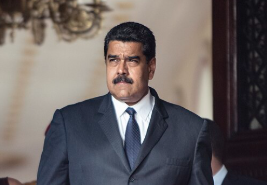
Photo by Eneas de Troya, wikimedia commons
8