
In a world of modern infrastructure, the Glenelg-Skye ferry stands as a proud and unique testament to ingenious, old-school engineering. This is not just a ferry; it’s the last manually operated turntable ferry in the world, a living piece of maritime history that offers the most charming and memorable way to arrive on the iconic Isle of Skye.
The ferry, the ‘MV Glenachulish’, was built in 1969 to solve a specific problem: the ferocious tidal currents in the Kyle Rhea straits, which can race at up to nine knots. To ensure vehicles could always disembark safely and drive off forwards, designers created a rotating platform for the deck. The crew manually rotates the turntable after docking, a fascinating and practical procedure that has been performed for decades.
This five-minute crossing for just six cars and a dozen passengers is an intimate and personal experience. It feels a world away from the impersonal nature of the Skye Bridge. The journey across the 500-metre-wide strait is scenic and often accompanied by sightings of local wildlife. The ferry’s very existence is a victory for local heritage, as it was saved from being decommissioned by a passionate community campaign in 2006.
Choosing to take this ferry is to choose an experience over mere convenience. It’s a chance to support a vital piece of living history, to witness a unique mechanical marvel in action, and to begin your Skye adventure with a story to tell. It has rightly become an essential and beloved part of the Hebridean tourist trail.
The Last of its Kind: Why You Must Ride Skye’s Turntable Ferry
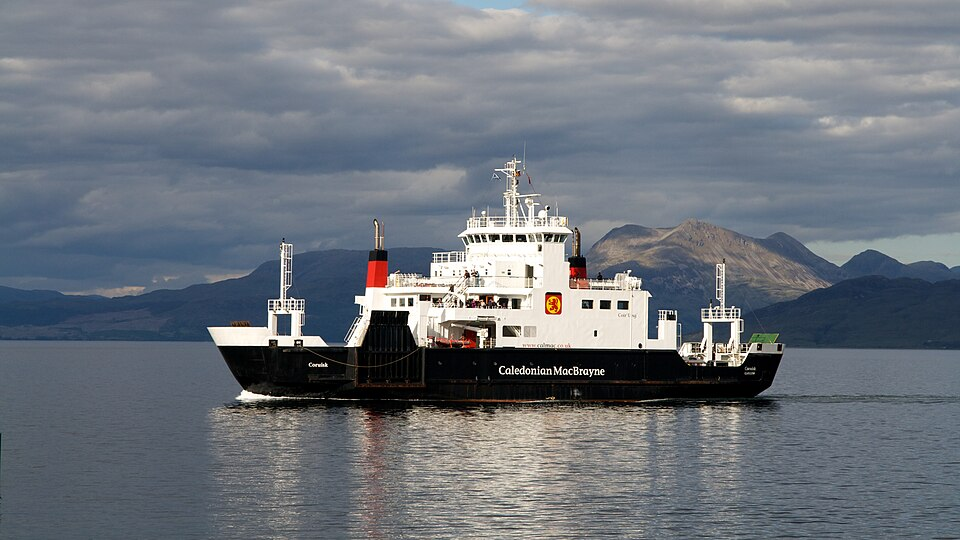
Picture Credit: commons.wikimedia.org
33