
The stone circles scattered across Cornwall’s moorlands served purposes modern archaeology continues unraveling. Recent research emphasizes their astronomical functions, revealing how Neolithic communities used these monuments as sophisticated calendrical instruments. The Land’s End peninsula contains exceptional concentrations of such sites, many oriented toward winter solstice astronomical events.
Carolyn Kennett’s archaeoastronomy work identifies patterns invisible to untrained observation. The peninsula’s granite ridge creates natural alignment with winter solstice sunset, a feature ancient builders enhanced through careful monument positioning. Sites like Chûn Quoit and Tregeseal circle demonstrate how prehistoric communities integrated geological features with astronomical knowledge to create powerful ceremonial landscapes that functioned as practical timekeeping tools.
The precision of these alignments required sustained observation spanning years or decades. Astronomical knowledge had to be preserved and transmitted, suggesting specialized practitioners maintained calendrical expertise. For agricultural communities dependent on seasonal patterns, accurate timekeeping meant survival—knowing when to plant crops, when to harvest, when to prepare for winter’s scarcity.
Beyond practical applications, these monuments embodied cosmological beliefs. The winter solstice represented a critical moment in the annual cycle when darkness reached its maximum before the sun reversed course. Rituals at stone circles may have been intended to encourage or celebrate this turning, ensuring cosmic order continued and spring would eventually arrive.
The Kenidjack holed stones represent a unique variation on calendrical monuments. Their small apertures positioned near ground level create specific light effects as the sun’s position changes through autumn. Research suggests they functioned as countdown calendars, with observable phenomena marking the approach of winter’s shortest day. Modern observers can still witness these alignments, experiencing how ancient peoples used landscape and light to track time. Contemporary festivals including Montol maintain these traditions, combining scholarly understanding with community celebration to keep Cornwall’s prehistoric heritage alive and relevant.
How Ancient Stone Circles Became Calendars for Tracking Winter’s Approach
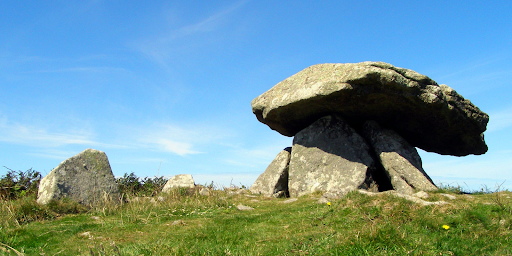
Photo by Jim Champion (treehouse1977), via wikimedia common
10
previous post